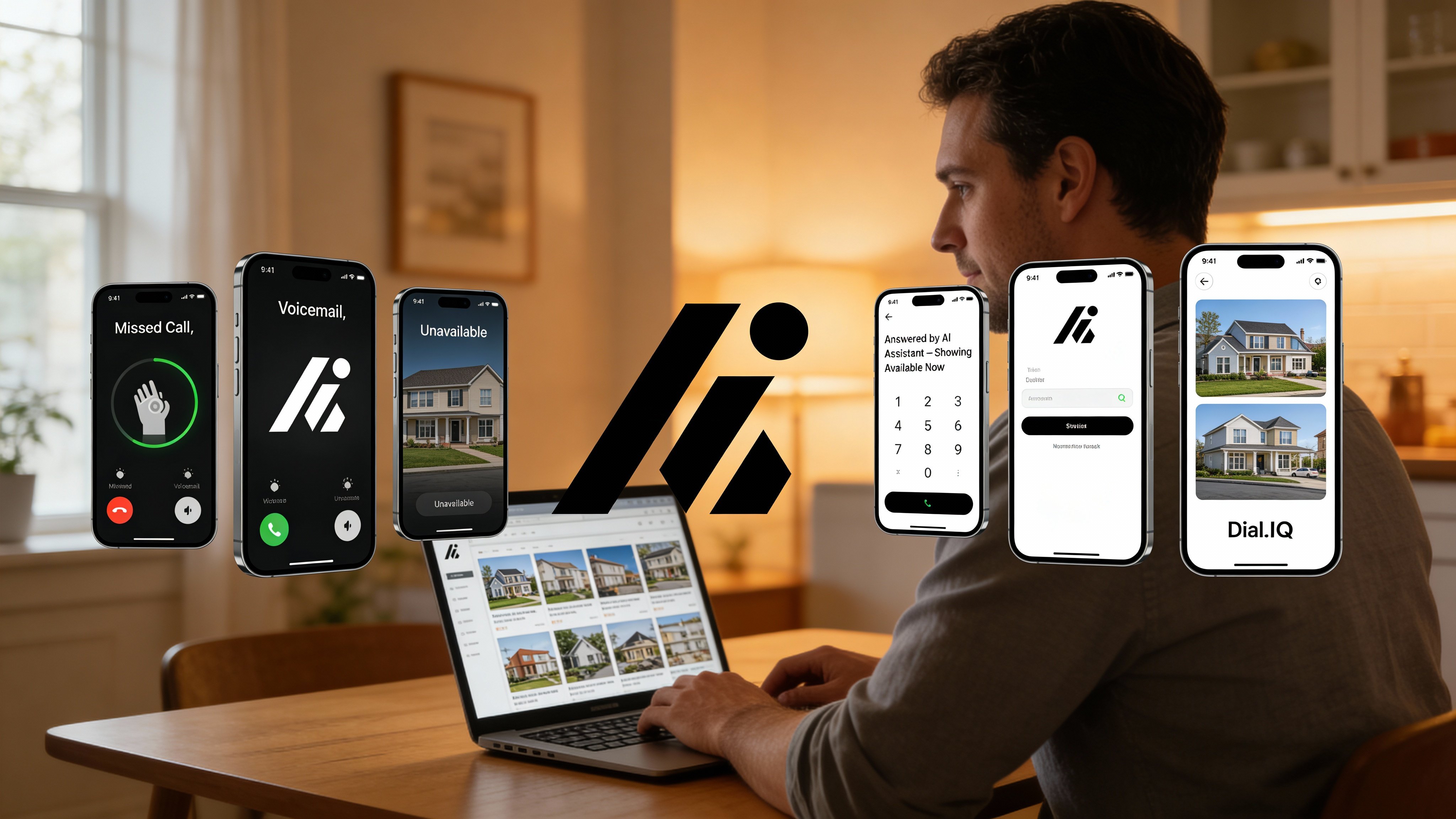
Your brokerage phone rings 47 times per day on average. But here's the problem: 34% of those calls go unanswered because agents are in showings, at closings, or with clients. Even worse, when calls do get answered, they're often routed to the wrong agent, creating frustration for both the caller and your team.
For real estate brokerages managing multiple agents, missed calls and poor lead routing translate directly to lost commissions. With the average residential real estate commission sitting at $12,500 per transaction, every mishandled call represents a potential five-figure loss. The math is brutal: if your brokerage misses just one qualified lead per week due to phone issues, you're leaving $650,000 on the table annually.
The challenge isn't just about answering more calls. Multi-agent brokerages face unique complexities that traditional phone systems simply weren't designed to handle. How do you ensure luxury property inquiries reach your high-end specialists? What happens when your top producer is unreachable during a critical buyer call? How do you maintain brand consistency when 15 different agents are answering calls in 15 different ways?
An AI phone system for real estate brokers solves these challenges by intelligently managing your entire call flow. These systems don't just answer calls—they qualify leads, route them to the right agent based on specialty and availability, schedule showings directly into calendars, and capture every opportunity even when your entire team is unavailable. The result? Brokerages implementing AI phone systems report 62% higher lead-to-showing conversion rates and a 47% reduction in lost opportunities.
The Multi-Agent Phone Challenge: Why Traditional Systems Fail Brokerages
Real estate brokerages operate differently than single-agent operations, and their phone systems need to reflect that complexity. Traditional phone systems create three critical problems that directly impact your bottom line.
The Lead Distribution Disaster
When a call comes into your main brokerage line, who answers it? Too often, it's whoever picks up first—regardless of whether they're the right fit for that particular lead. A first-time homebuyer inquiry might reach your luxury specialist who's less interested in that price point. A commercial property question could land with a residential-only agent. A Spanish-speaking caller might get transferred three times before finding someone who can help.
This random distribution wastes leads and frustrates potential clients. Research from the National Association of Realtors shows that 67% of buyers who are randomly connected to an agent—rather than thoughtfully matched—end up working with a different brokerage. That's not a system problem; it's a revenue hemorrhage.
The Availability Black Hole
Real estate agents are rarely at their desks. They're driving clients to properties, attending closings, hosting open houses, and meeting with lenders. A traditional phone system's answer? Voicemail. The data on voicemail in real estate is damning: 78% of property inquiries that reach voicemail never get a callback because the caller has already moved on to the next listing.
Peak inquiry times—typically weekday evenings between 6-9 PM and weekend afternoons—are exactly when your agents are busiest with showings. Your busiest times are your most vulnerable times for lost leads.
The Inconsistent Experience Problem
With multiple agents answering your brokerage line, you get multiple versions of your brand. One agent might be thorough about qualifying buyers. Another rushes through calls. A third forgets to ask about pre-approval status. This inconsistency creates a fragmented client experience that undermines your brokerage's professional image.
Worse, there's no systematic lead capture. Some agents meticulously enter every inquiry into your CRM. Others jot notes on scratch paper. Many forget entirely. Without consistent data capture, your brokerage is flying blind on lead sources, conversion rates, and agent performance.
How AI Phone Systems Transform Multi-Agent Brokerage Operations
An AI phone system for real estate brokers fundamentally reimagines how calls flow through your organization. Instead of a traditional receptionist or random agent pickup, intelligent automation manages every interaction from first ring to scheduled showing.
Intelligent Lead Routing Based on Specialization
Modern AI phone systems for brokerages use sophisticated routing logic that traditional systems can't match. When a call comes in, the AI asks qualifying questions to understand what the caller needs, then routes to the most appropriate agent based on multiple factors.
For a luxury home inquiry, the system identifies price point and property type, then routes to agents who specialize in high-end residential. For a commercial opportunity, it directs to your commercial team. For a specific neighborhood request, it connects to the agent with the most listings in that area. Investment property inquiries go to agents with investor client experience.
This intelligent routing happens in seconds, creating a concierge-level experience for callers while maximizing conversion probability. Callers speak with someone who genuinely specializes in what they need, and agents receive only leads that match their expertise and interest.
Round-Robin and Performance-Based Distribution
Beyond specialization matching, AI systems can distribute leads fairly across your team using customizable rules. Round-robin distribution ensures every agent gets equal opportunity. Performance-based routing rewards your top converters with more leads. Territory-based rules respect geographic specializations.
You can also set availability schedules so agents only receive calls when they're actually available to follow up. If an agent is on vacation or working a listing presentation, the system automatically routes their would-be calls to available team members. No more lost leads because someone's phone was off.
24/7 Lead Capture and Qualification
Property searches don't stop at 5 PM. In fact, studies show that 43% of property inquiry calls happen outside traditional business hours. An AI receptionist for your brokerage captures every single one of these after-hours opportunities.
The system answers professionally, asks the right qualifying questions, and schedules showings directly into agent calendars. When your agents arrive at the office Monday morning, they have a queue of qualified, scheduled appointments rather than a list of voicemails to return (which, statistically, 62% of buyers won't even answer because they've already moved on).
For a brokerage managing property listings in competitive markets, 24/7 availability creates a decisive advantage. While competing brokerages lose evening and weekend inquiries to voicemail, your AI system is qualifying buyers, answering property questions, and booking showings around the clock.
Essential Features for Real Estate Brokerage AI Systems
Not all AI phone systems are built for the unique needs of multi-agent real estate operations. When evaluating options for your brokerage, these features separate purpose-built real estate solutions from generic business phone systems.
CRM Integration with Lead Intelligence
Your AI phone system should integrate seamlessly with real estate CRM platforms like Follow Up Boss, LionDesk, kvCORE, Chime, and BoomTown. Every call should automatically create or update a contact record with complete conversation details, qualification information, and interaction history.
Advanced systems even use your existing CRM data to personalize conversations. If a contact calls back, the AI recognizes them and references previous interactions. "Welcome back, Mr. Johnson. I see you were interested in the downtown condo listings last week. Are you ready to schedule some showings?"
This integration eliminates duplicate data entry and ensures your entire team has access to complete lead intelligence. No more asking agents to manually log call details or losing track of which leads have been followed up.
MLS and Property Database Integration
The most sophisticated AI systems for real estate can access property information directly from MLS feeds or your brokerage's listing database. When a caller asks about a specific property, the AI provides accurate details about price, square footage, bedrooms, bathrooms, and showing availability without transferring to an agent.
For general inquiries ("I'm looking for a 3-bedroom under $500,000 in the northwest area"), the system can describe available listings that match criteria and offer to schedule showings for properties of interest. This level of property intelligence dramatically improves the caller experience and reduces agent time spent on basic information requests.
Smart Showing Scheduling
Integration with Google Calendar, Outlook, and real estate scheduling platforms like ShowingTime and Calendly enables the AI to schedule showings directly based on agent availability. The system checks multiple calendars, finds mutually available times, and books appointments without any agent involvement.
For brokerages, this means fewer scheduling phone tag situations and faster showing response times. Speed matters tremendously in real estate: leads that get showing appointments scheduled within one hour are 7x more likely to convert than those who wait 24+ hours for response.
Multi-Language Support for Diverse Markets
In diverse real estate markets, language barriers cost brokerages significant opportunities. AI systems with multi-language capabilities can converse fluently in Spanish, Mandarin, Vietnamese, Tagalog, and dozens of other languages.
When a Spanish-speaking buyer calls about a listing, they're greeted in Spanish, qualified in Spanish, and either connected to a Spanish-speaking agent or scheduled for a callback. This inclusive approach expands your market reach and creates competitive advantage in multicultural communities.
Call Recording and Quality Assurance
Every call handled by your AI system is recorded and transcribed, creating a complete audit trail for compliance and training purposes. Broker-owners can review how leads are being qualified, identify common objection patterns, and ensure consistent brand representation.
These recordings are also invaluable for dispute resolution and transaction documentation. If there's ever a question about what was said during an initial inquiry call, you have a complete, timestamped record.
Real Brokerages, Real Results: AI Phone System Success Stories
The impact of AI phone systems on real estate brokerage operations isn't theoretical. Brokerages across the country are capturing more leads, improving agent productivity, and increasing revenue with these systems.
Metro Seattle Brokerage: 62% Increase in Showing Appointments
Cascade Realty, a 23-agent brokerage in the competitive Seattle market, was drowning in missed calls. With agents constantly in showings and open houses, their main line went to voicemail 41% of the time. Their broker-owner, Jennifer Park, knew they were losing opportunities but couldn't quantify the impact.
After implementing an AI phone system with intelligent agent routing and 24/7 availability, the numbers told a dramatic story. In the first quarter after implementation, showing appointments increased 62% compared to the same period the previous year. More impressively, after-hours calls accounted for 38% of all scheduled showings—opportunities that would have been completely lost before.
"The system pays for itself with just one additional transaction per month," Park explains. "We're seeing five to seven extra closings per quarter directly attributable to better lead capture. That's $75,000 to $100,000 in additional commission revenue quarterly."
Luxury Brokerage: Better Agent Utilization and Satisfaction
A Luxury Property brokerage in Phoenix manages high-end residential sales across Phoenix and Scottsdale with a team of 12 specialized agents. Their challenge wasn't just missed calls—it was lead misalignment. Too often, entry-level inquiries were routed to their luxury specialists, while high-value leads occasionally reached newer agents.
Their AI phone system implementation focused on sophisticated routing based on price point, property type, and agent specialization. The system asks qualifying questions about budget and property preferences, then routes accordingly. Luxury inquiries ($2M+) are directed to senior luxury specialists. First-time homebuyer calls go to agents who excel with that demographic.
The results were immediate. Agent satisfaction scores improved because everyone was receiving leads aligned with their expertise. Conversion rates increased 34% because leads were matched with agents who genuinely specialized in their needs. And the brokerage's average sale price increased as luxury specialists could focus exclusively on high-value opportunities.
Multi-Office Brokerage: Unified Communication Across Locations
Another brokerage with multi-locations operates four offices across the Austin metro area with 47 total agents. Before implementing an AI system, each office had its own phone system and processes. Lead distribution was fragmented, and there was no centralized visibility into call volume or lead quality across locations.
Their AI phone system created a unified communication infrastructure. All offices share the same main number, but intelligent routing ensures leads are directed to agents in the appropriate geographic territory. The central dashboard gives the broker-owner real-time visibility into call volume, lead sources, and conversion rates across all locations.
Most importantly, the system eliminated territorial conflicts. When all agents in a specific territory are unavailable, calls automatically overflow to the next closest office rather than going to voicemail. This collaborative approach increased lead capture by 43% and fostered a more cohesive brokerage culture.
Implementing an AI Phone System: What Brokerages Need to Know
Transitioning from a traditional phone system to an AI-powered solution might seem daunting, but modern systems are designed for quick implementation with minimal disruption to your operations.
Setup Timeline and Process
Most real estate brokerages can be fully operational on an AI phone system within 5-7 business days. The process typically includes four phases: consultation and customization, integration setup, agent training, and monitoring and optimization.
During consultation, you'll work with implementation specialists to define your routing rules, create call scripts, and establish qualification questions. This is where you specify which types of leads go to which agents, set up territory boundaries, and customize the caller experience to match your brand.
Integration setup connects the AI system with your CRM, calendar platforms, and any other business tools. Most major real estate platforms have pre-built integrations that require minimal technical setup. Your team typically just needs to authorize the connections.
Agent training is usually accomplished in a single one-hour session. Agents learn how to access their call logs, listen to recordings, manage their availability schedules, and retrieve lead information. The systems are intuitive enough that most agents are comfortable within the first day.
The final phase involves monitoring early performance and making adjustments. You might refine routing rules based on which agents are converting best, adjust qualification questions based on common inquiries, or customize responses to specific property types. The best AI systems learn and improve over time.
Cost Considerations and ROI
AI phone systems for real estate brokerages typically range from $699-$1,200 per month depending on call volume, number of agents, and feature requirements. While this represents a meaningful investment, the ROI calculation for brokerages is straightforward.
Consider: if your brokerage currently misses 30% of calls (industry average) and receives 250 calls monthly, you're losing 75 potential leads. If even 10% of those would have converted to transactions at an average commission of $12,500, you're leaving $93,750 monthly on the table. The system pays for itself by capturing just one additional transaction per month.
Most brokerages see ROI within 30-45 days through a combination of increased lead capture, better routing efficiency, and reduced administrative burden. The ongoing value compounds over time as the system accumulates data about lead patterns and continuously optimizes performance.
Change Management and Agent Adoption
The biggest implementation challenge isn't technical—it's cultural. Agents may initially resist change, particularly if they're accustomed to answering their own calls or worry about losing direct contact with clients.
Successful brokerages address this head-on with clear communication about benefits. Frame the AI system as a tool that helps agents focus on high-value activities (showings, negotiations, client relationships) rather than phone tag and administrative tasks. Emphasize that the system captures leads agents would have missed entirely, creating additional opportunity rather than taking anything away.
Some brokerages incentivize adoption by tracking conversion rates for AI-routed leads versus traditionally captured leads, then publicly celebrating agents who excel with AI-sourced clients. When agents see colleagues closing more deals with better-qualified leads, resistance typically evaporates quickly.
Choosing the Right AI Phone System for Your Brokerage
With numerous AI phone solutions entering the market, selecting the right platform for your brokerage requires evaluating several critical factors beyond just pricing.
Real Estate-Specific Features
Generic business AI phone systems lack the real estate specialization your brokerage needs. Look for platforms built specifically for real estate or that offer deep customization for property-related conversations. The system should understand real estate terminology, handle property-specific questions intelligently, and integrate with real estate CRM platforms and MLS systems.
Systems that can't discuss property features, pricing, or showing availability will frustrate callers and create more work for your agents rather than less. Purpose-built real estate solutions provide dramatically better caller experiences and higher conversion rates.
Scalability for Growth
Your brokerage's needs will evolve. Can the system scale from 10 agents to 50 without requiring a complete replacement? Does pricing scale reasonably as you add agents and call volume? Can you easily add new offices or territories to your routing structure?
Cloud-based AI systems typically offer the best scalability because they don't require hardware installations or complex IT infrastructure. You should be able to add agents, adjust routing rules, and modify call flows through a simple web interface without vendor intervention.
Customization and Control
Every brokerage operates differently. Your AI phone system should adapt to your processes, not force you into a one-size-fits-all structure. Look for platforms that allow you to customize call scripts, create unique routing rules for different listing types, set individual agent availability schedules, and define specific qualification criteria.
The best systems provide both pre-configured templates for common real estate scenarios and complete flexibility to build custom workflows. You shouldn't need to involve vendor support for every small adjustment—basic customization should be accessible through an intuitive admin interface.
Analytics and Reporting
Data-driven brokerages need comprehensive analytics about their phone performance. Your AI system should provide visibility into call volume patterns, peak inquiry times, lead sources, conversion rates by agent, average call duration, and most common property inquiries.
Advanced reporting helps you identify opportunities for improvement. If certain agents consistently convert AI-routed leads at higher rates, what are they doing differently? If call volume spikes on specific days or times, should you adjust staffing or showing availability? If certain property types generate the most inquiries, should you focus listing acquisition efforts accordingly?
This business intelligence transforms your phone system from a simple communication tool into a strategic asset that informs business decisions.
The Future of Your Brokerage Starts With Better Phone Systems
The real estate industry is becoming increasingly competitive, and brokerages that leverage technology effectively gain decisive advantages. An AI phone system for real estate brokers isn't just about answering more calls—it's about creating a systematized lead capture and routing infrastructure that maximizes every opportunity.
While competing brokerages lose leads to voicemail and misrouted calls, your AI system is qualifying buyers, answering property questions, and booking showings 24 hours per day. While other agents play phone tag trying to schedule showings, your team's calendars are filled with pre-qualified appointments. While traditional systems create inconsistent caller experiences, your AI delivers professional, on-brand interactions every single time.
The brokerages thriving in today's market aren't necessarily the ones with the most agents or the biggest advertising budgets. They're the ones that capture and convert leads most efficiently. They're the ones where technology amplifies human expertise rather than replacing it. They're the ones where agents can focus on what they do best—building relationships and closing deals—while intelligent systems handle routine communication tasks.
Your brokerage's phone system is either an asset or a liability. It's either capturing opportunities or losing them. It's either creating competitive advantage or competitive disadvantage. The question isn't whether to implement an AI phone system—it's how quickly you can make the transition before more of your competition does.