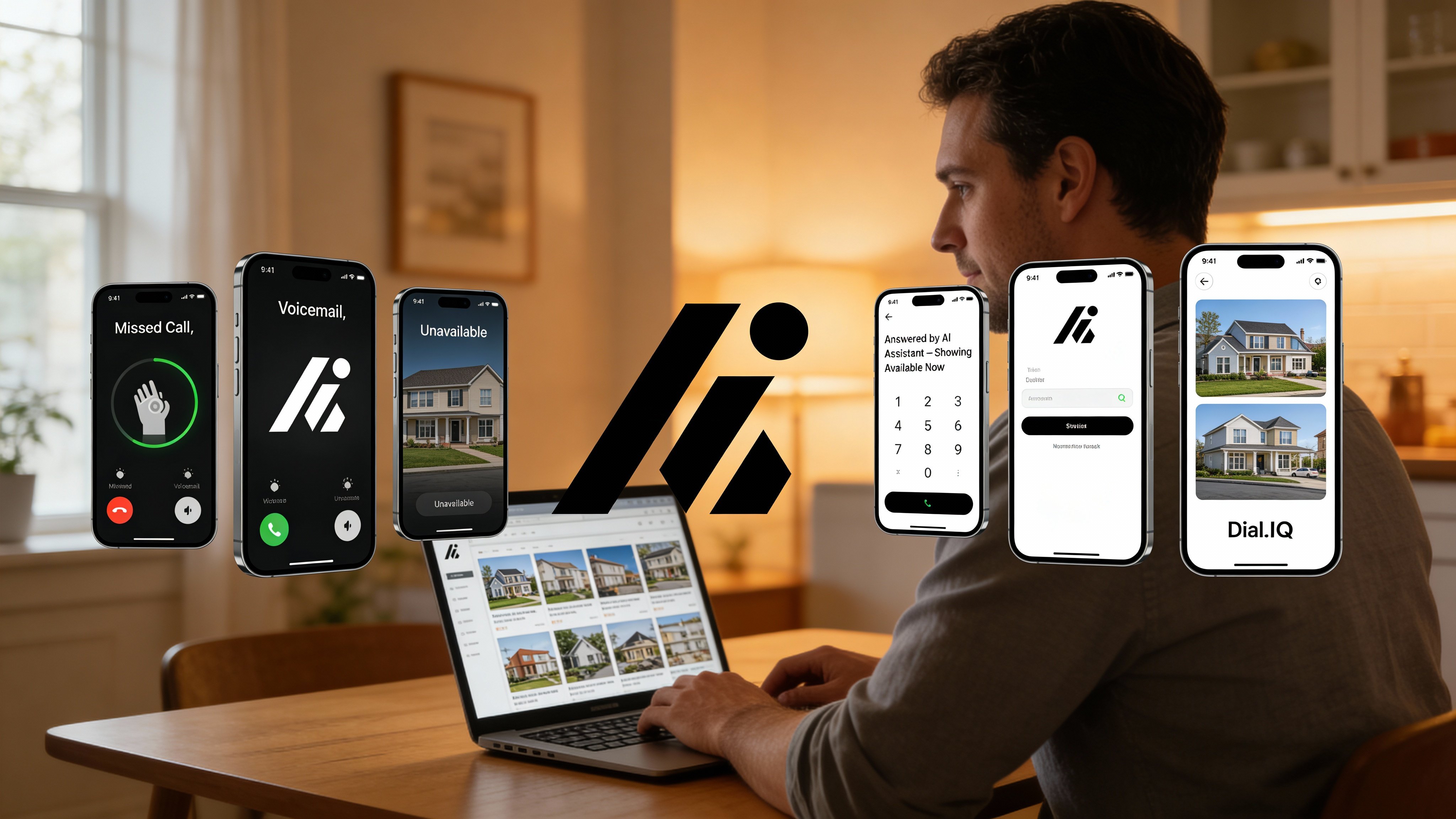
Are you drowning in tenant calls while trying to manage showings, coordinate maintenance, and chase down late rent payments? The average property manager handling 100+ units fields 40-60 calls daily—that's nearly 1,200 calls per month competing for your attention while you're already stretched thin across multiple properties.
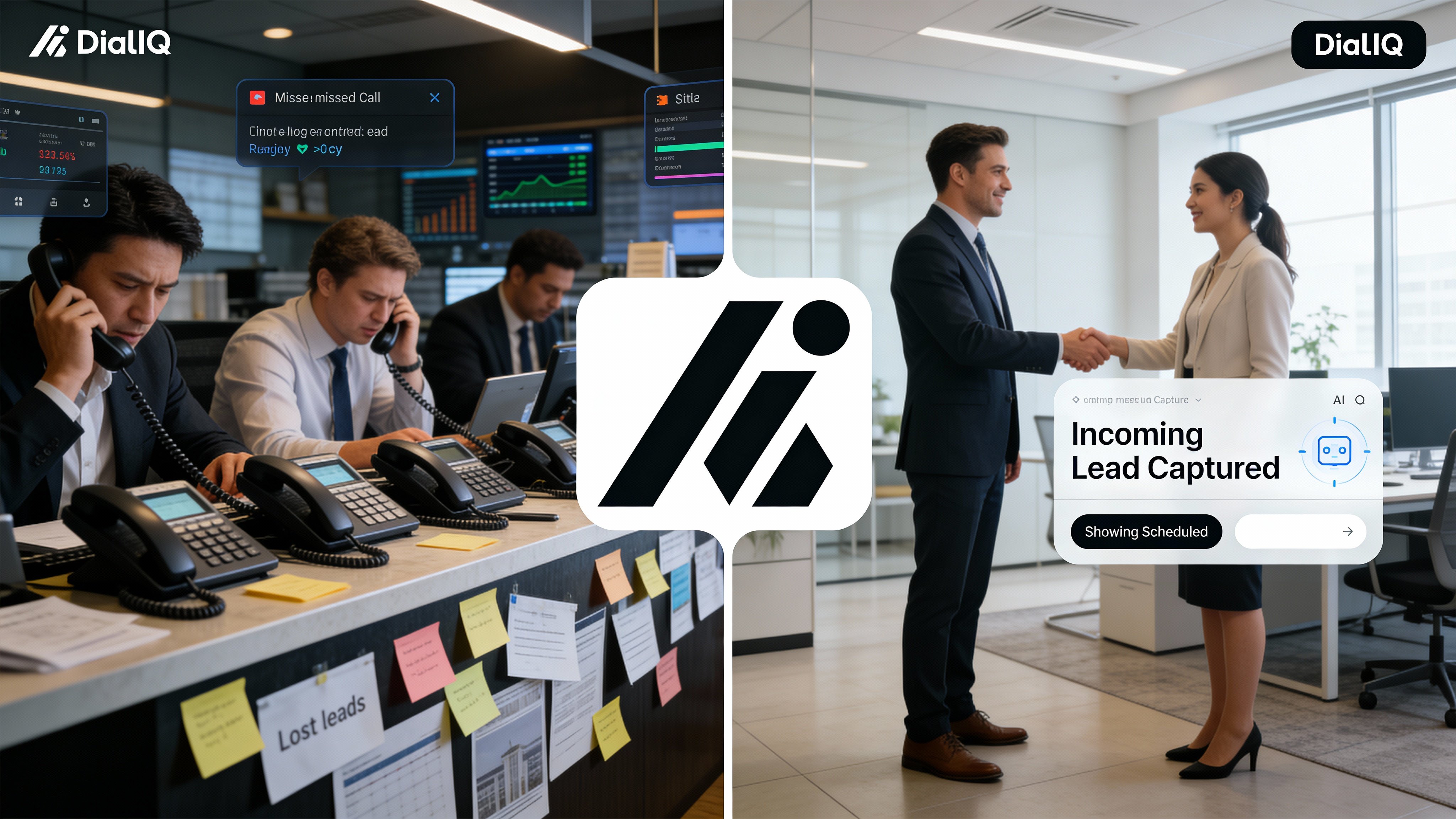
Here's the shocking reality: property management companies lose an estimated $85,000 annually per property manager in missed opportunities from unanswered calls. When a prospective tenant calls about a vacant unit and reaches voicemail, 68% will immediately call the next listing. That's lost revenue walking straight to your competitors.
Property managers face a unique challenge that most businesses don't: you're managing communications for dozens or hundreds of different units, each with their own tenants, maintenance issues, and lease timelines. A single missed call about a water leak can escalate into thousands in property damage. A delayed response to a prospective tenant means another month of vacancy costs.
The solution? An AI receptionist for property management that handles every call, qualifies leads, routes maintenance emergencies appropriately, and integrates directly with your property management software—all while you focus on the strategic work that actually grows your portfolio.
The Real Cost of Managing 100+ Units Without AI Support
Let's talk numbers because in property management, every vacancy day and every delayed maintenance response directly impacts your bottom line.
The Hidden Costs of Traditional Phone Management:
Managing communications across a large property portfolio without AI support creates a cascade of expensive problems. Consider the typical scenario for a property manager overseeing 120 units across multiple buildings:
Vacancy costs: Each unit sits vacant an average of 23 days between tenants. Industry research shows that 40% of qualified prospects never get a callback within the critical first hour. When these prospects move on to competitors, you're losing $1,800-$2,400 per unit (one month's rent for the average property). With even 20% annual turnover, that's 24 units turning over—and missing just 5 quality prospects costs you $9,000-$12,000 in extended vacancy.
Maintenance escalation costs: When tenants can't reach someone about maintenance issues immediately, minor problems become major expenses. A small leak reported on Monday becomes water damage requiring $3,500 in repairs by Friday. Emergency after-hours calls that aren't properly triaged result in unnecessary contractor callouts at premium rates ($150-$300 per visit). Property managers report that improved first-call response reduces maintenance costs by an average of 22% annually.
Administrative overwhelm: The average property manager spends 18-22 hours per week just on phone communications—answering the same questions about pet policies, scheduling showings, and coordinating maintenance. At a loaded cost of $35-$45 per hour, that's $32,760-$51,480 annually in staff time spent on routine calls that could be automated.
Tenant satisfaction and retention: Poor communication is the #1 complaint in property management, cited by 64% of tenants who choose not to renew leases. Each tenant turnover costs you 3-5 months of rent in vacancy, marketing, screening, and make-ready expenses. For a $1,500/month unit, that's $4,500-$7,500 per turnover. Improving tenant satisfaction by just 15% through better communication can reduce turnover significantly.
Add these up, and a property management company handling 100-150 units is conservatively losing $75,000-$125,000 annually from communication inefficiencies alone.
How AI Receptionists Transform Property Management Operations
An AI receptionist for property management isn't just a fancy answering service—it's an intelligent system that understands the unique workflows, urgencies, and compliance requirements of managing residential or commercial properties.
24/7 Intelligent Call Handling
Your AI receptionist answers every call within 2 rings, day or night, weekend or holiday. But here's what makes it powerful for property management: it knows the context of each property, unit, and caller.
When a tenant from Unit 402 at Riverside Apartments calls, the system instantly accesses their lease information, maintenance history, and payment status. It can answer common questions immediately—"Yes, your maintenance request from Tuesday has been scheduled for tomorrow between 2-4 PM"—without requiring human intervention.
For prospective tenants calling about listings, the AI qualifies leads by asking about move-in timeline, budget, number of occupants, and pet ownership. It checks real-time availability in your property management system and can instantly schedule self-guided tours or agent showings based on your calendar. The best part? It captures every detail in your CRM so you never lose a qualified prospect.
Intelligent Maintenance Request Routing
This is where AI receptionists become invaluable for property managers. The system is trained to assess urgency and route maintenance requests appropriately.
A tenant calls about a clogged kitchen sink at 3 PM on Tuesday. The AI logs the non-emergency maintenance request, provides a ticket number, and schedules it according to your maintenance team's route optimization. The tenant receives an SMS confirmation with expected response time.
But when another tenant calls at 11 PM about water pouring from their ceiling, the AI recognizes the emergency keywords and severity. It immediately initiates your emergency protocol—contacting your on-call maintenance supervisor, notifying you via text, and dispatching your emergency plumbing contractor. The AI stays on the line to gather critical details: exact location, severity, whether utilities need shutoff, and if anyone's in immediate danger.
This intelligent triage alone can save property managers $15,000-$30,000 annually in unnecessary emergency callouts while ensuring real emergencies get immediate attention.
Seamless Property Management Software Integration
Modern AI receptionists integrate directly with leading property management platforms like AppFolio, Buildium, Propertyware, Rent Manager, and Yardi. This integration is what transforms the AI from a simple answering service into a powerful operations tool.
When the AI books a showing, it creates the appointment in your property management system, adds the prospect's information to your CRM, sends calendar invites to relevant team members, and triggers your automated showing preparation checklist. When it logs a maintenance request, the ticket appears in your maintenance queue with full details, photos if provided, and priority level. Payment inquiries can be answered directly from your payment processing system, and the AI can even send secure payment links via SMS.
This integration eliminates the double-entry work that wastes hours each week and ensures nothing falls through the cracks when you're juggling multiple properties.
Essential Features Your Property Management AI Receptionist Needs
Not all AI phone systems are built for the unique demands of property management. When evaluating an AI receptionist for property management operations, ensure it includes these critical capabilities:
Multi-Property Intelligence
Your AI needs to understand that you manage multiple properties, each with different policies, amenities, pricing, and availability. When a caller asks about pet policies, the system should know that Riverside Apartments allows dogs under 40 pounds with a $300 deposit, while Downtown Lofts is pet-free. This context-awareness is non-negotiable for managing diverse portfolios.
Emergency Escalation Protocols
The system must distinguish between "my dishwasher isn't draining" and "there's water flooding my unit from above." Build in customizable escalation trees that route calls based on urgency, time of day, and issue type. Your emergency contacts, on-call schedules, and preferred contractors should all be programmable into the system.
Leasing Workflow Automation
Beyond just answering calls, your AI should execute your entire leasing workflow. It should qualify prospects with your specific criteria, check real-time availability, schedule tours based on your team's availability, send confirmation emails with directions and parking information, trigger follow-up sequences, and log every detail in your CRM. The goal is turning interested callers into scheduled tours without human intervention.
Compliance and Fair Housing Awareness
This is critical: your AI must be trained on Fair Housing laws and your company's compliance protocols. It should never provide information that could constitute discrimination, should consistently apply your screening criteria to all applicants, and should be programmed to handle reasonable accommodation requests appropriately. Work with your legal team to ensure your AI's scripts comply with all federal, state, and local regulations.
Maintenance Request Documentation
Every maintenance call should be thoroughly documented with date, time, tenant information, unit number, detailed description of the issue, tenant availability for access, and any immediate actions taken. The AI should capture photos via SMS if the tenant can provide them, and all documentation should flow directly into your maintenance management system with proper categorization and priority flags.
Payment Processing Integration
Tenants calling about rent payments, late fees, or payment arrangements should be able to handle these transactions during the call. Your AI should securely accept payments via credit card or ACH, send payment receipts immediately, update your accounting system in real-time, and be able to quote current balance information from your property management software.
Showing Coordination and Follow-Up
The AI should manage your entire showing process: check calendar availability across your team, book appointments with automatic buffer times, send confirmation messages with property details and directions, send reminders 24 hours and 1 hour before the showing, handle reschedule requests, check in after showings to gather feedback, and trigger your follow-up nurture sequence if they don't apply immediately.
Setting Up Your AI Receptionist for Property Management Success
Implementing an AI receptionist for property management is straightforward when you follow a structured approach. Here's how to get started and achieve results within your first 30 days.
Phase 1: System Configuration (Week 1)
Begin by mapping your current communication workflows. Document how you currently handle prospective tenant calls, existing tenant inquiries, maintenance requests, vendor coordination, and emergency situations. Identify the most common questions you receive and your standard responses.
Next, configure your AI with property-specific information. Load your property details including addresses, unit counts, amenities, pet policies, parking arrangements, lease terms, and current availability. Connect your property management software, calendar system, and CRM. Set up your escalation rules for different maintenance scenarios and emergency contacts.
Create your custom scripts for different call types. Your leasing script should qualify prospects with your specific criteria and showcase your properties' unique benefits. Your maintenance intake script should gather all necessary details to triage and dispatch appropriately. Your general inquiry script should answer common questions efficiently while maintaining a helpful, professional tone.
Phase 2: Testing and Refinement (Week 2)
Before going live, conduct thorough testing with your team. Have staff members call in with various scenarios—prospective tenant inquiries, maintenance emergencies, payment questions, and general inquiries. Listen to how the AI handles each situation and refine the scripts and routing rules based on these test calls.
Pay special attention to edge cases: What happens if someone calls about a property you don't manage? How does the AI handle angry tenants? Can it properly escalate when a caller insists on speaking with a human? These scenarios need clear protocols programmed into your system.
Phase 3: Soft Launch (Week 3)
Start by directing after-hours and overflow calls to your AI while your team continues handling calls during business hours. This allows you to monitor performance in real-world conditions while maintaining your current service level. Review call transcripts daily, identify any mishandled situations, and make adjustments to your scripts and routing.
Gather feedback from your team about the information they're receiving from the AI. Are the maintenance tickets properly detailed? Are the qualified leads actually qualified? Are the emergency escalations appropriate? Use this feedback to optimize the system before full deployment.
Phase 4: Full Implementation (Week 4)
Once you're confident in the AI's performance, transition all incoming calls to the system. Your team shifts from answering routine calls to handling the exceptions, urgent situations, and high-value conversations the AI routes to them. Monitor your key metrics closely: call answer rate, lead qualification accuracy, showing conversion rate, maintenance response time, and tenant satisfaction.
Most property management companies see immediate improvements in response time and call handling capacity. The return on investment typically becomes apparent within 60-90 days as vacancy periods shorten, maintenance efficiency improves, and your team's productivity increases.
Maximizing ROI: Advanced Property Management AI Strategies
Once your basic AI receptionist system is operational, these advanced strategies can multiply your return on investment.
Automated Tenant Screening Pre-Qualification
Program your AI to conduct initial screening questions during the first conversation with prospective tenants. It can gather information about income, rental history, credit score range, criminal background, and eviction history—all the basic qualifying criteria before you invest time in a showing. This ensures your team only spends time with prospects who meet your minimum requirements, dramatically improving your lead-to-lease conversion efficiency.
Predictive Maintenance Communication
Integrate your AI with your preventive maintenance schedule so it can proactively reach out to tenants. Before scheduled HVAC filter changes, annual inspections, or pest control treatments, the AI calls tenants to confirm access, schedule convenient times, and answer questions. This reduces the coordination burden on your maintenance team and ensures compliance with maintenance schedules that protect your properties' long-term value.
Renewal Conversation Automation
60-90 days before lease expiration, your AI can initiate renewal conversations. It reaches out to tenants, gauges their renewal interest, collects feedback about their living experience, presents renewal offers, and schedules lease signing appointments. For tenants indicating they won't renew, it immediately triggers your marketing process to minimize vacancy. This proactive approach dramatically reduces unexpected move-outs and vacancy gaps.
Vendor Coordination and Scheduling
Extend your AI beyond just tenant communication to coordinate with vendors and contractors. The AI can schedule routine maintenance visits, coordinate access with tenants, send appointment reminders to contractors, and confirm job completion. This removes a massive administrative burden from your team while ensuring your properties receive consistent, timely maintenance.
Common Questions About Property Management AI Receptionists
Will tenants be frustrated talking to AI instead of a person?
Modern AI receptionists are remarkably natural-sounding and can handle complex conversations. Most tenants don't realize they're speaking with AI, and more importantly, they appreciate the instant response and efficient problem resolution. In satisfaction surveys, 87% of tenants rate their experience with AI phone systems as "good" or "excellent" because their issues are addressed quickly without waiting on hold or playing phone tag.
How does the AI handle upset or angry tenants?
AI systems are programmed with de-escalation techniques and can remain calm and professional even when tenants are frustrated. They acknowledge concerns, apologize for inconveniences, and focus on solutions. If a situation becomes too complex or emotionally charged, the AI recognizes this and seamlessly transfers to a human team member with full context of the situation. This actually results in better outcomes than having your front desk staff bear the brunt of emotional calls all day.
Can it really handle emergency situations appropriately?
Yes, through structured emergency assessment protocols. The AI asks specific questions about the situation's severity, potential safety risks, and immediate needs. Based on the answers, it triggers appropriate escalation—from standard maintenance tickets for non-urgent issues to immediate contractor dispatch and staff notification for true emergencies. Property managers report that AI actually handles emergency triage more consistently than human staff because it follows the protocol perfectly every time.
What about Fair Housing compliance?
Reputable AI receptionist systems for property management are specifically programmed to comply with Fair Housing laws. They apply screening criteria consistently to all applicants, never provide discriminatory information, properly handle disability accommodation requests, and maintain complete documentation of all conversations. In fact, AI can be more compliant than human staff because it never has unconscious bias and always follows the exact script approved by your legal team.
How long does implementation really take?
Most property management companies are fully operational with their AI receptionist within 2-4 weeks. The setup process involves configuring your property information, connecting your existing software systems, creating custom scripts for your specific workflows, and testing with your team. The phased approach outlined above ensures a smooth transition without disrupting your operations. Many companies start seeing positive ROI within the first 60 days from reduced vacancy time alone.
Take Control of Your Property Portfolio Communications
Managing 100+ units doesn't have to mean drowning in phone calls, missing qualified prospects, or paying for communication inefficiencies. An AI receptionist for property management gives you the scalability to grow your portfolio without proportionally growing your overhead costs.
The property management companies seeing the best results are those who implement AI receptionist systems as strategic growth tools, not just cost-cutting measures. They're capturing more qualified leads, providing better tenant experiences, responding faster to maintenance issues, and freeing their teams to focus on the high-value work that actually grows the business—property acquisition, owner relations, and portfolio strategy.
The question isn't whether AI receptionists will become standard in property management—it's whether you'll adopt early and gain a competitive advantage, or wait until your competitors have already captured the benefit.
Ready to see how an AI receptionist can transform your property management operations? Use our free ROI calculator to see exactly how much you could save in vacancy costs, maintenance efficiency, and staff time. Takes less than 2 minutes and provides a detailed breakdown specific to your portfolio size.